.png)
White Earth Nation

Updated: Mar 8
Quick Facts
Tribal Name: White Earth Nation (Gaa-waabaabiganikaag)
Language: Ojibwemowin (Anishinaabemowin)
Language Group: Algonquian
Enrollment: ~19,000
Location: Northwestern Minnesota
Official Website: whiteearth.com
History

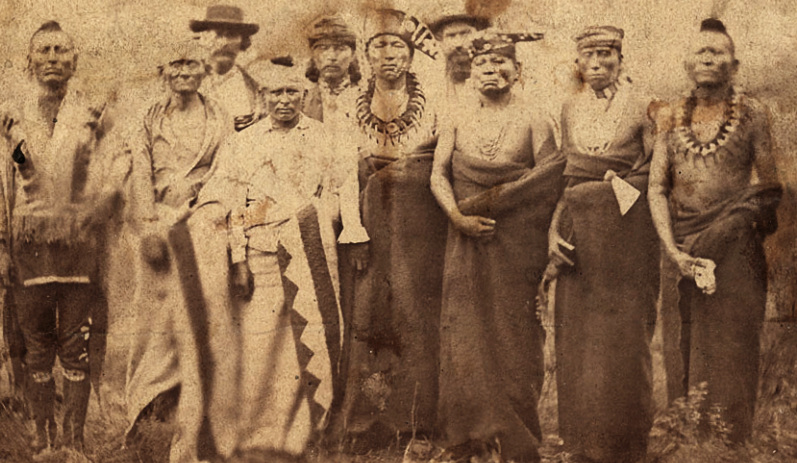
The Anishinaabe (Ojibwe) people originally migrated westward along the Great Lakes following spiritual prophecies to find the place where "food grows on water" (manoomin, or wild rice). The White Earth Reservation was established in 1867 by a treaty with the U.S. government, intended to consolidate several Ojibwe bands into one area. In the decades that followed, policies like the Nelson Act of 1889 led to devastating land loss, with timber companies taking control of the region's rich pine forests. Despite generations of displacement and assimilation efforts, the White Earth Anishinaabe have fought vigorously to reclaim their ancestral lands, protect their natural resources, and ensure their cultural sovereignty remains intact. Source: White Earth Nation History (whiteearth.com)
Cultural Heritage

Anishinaabe culture is deeply intertwined with the seasonal cycles of the earth. From the early spring maple sugar camps (iskigamizigan) to the late summer harvesting of wild rice (manoomin) on the lakes, the land provides both physical and spiritual sustenance. The teachings of the Midewiwin (Grand Medicine Society) and the Seven Grandfather Teachings—Wisdom, Love, Respect, Bravery, Honesty, Humility, and Truth—form the ethical foundation of the community. The historic prophecy of the Seven Fires remains a vital framework for the present generation, guiding the ongoing revitalization of their language, ceremonies, and traditional ecological knowledge. Source: Ojibwe Cultural Foundation (ojibweculture.ca)
Recognition and Treaties

White Earth Nation is a federally recognized sovereign tribe and represents the largest reservation in Minnesota by land area. The tribe's legal relationship with the United States was formalized under the 1867 Treaty of Washington. Today, the White Earth Tribal Council operates as the governing body, managing extensive community services, health care facilities, and educational programs, including the White Earth Tribal and Community College. Source: Bureau of Indian Affairs (bia.gov)
Relatives and Neighbors
White Earth is a vital part of the broader Anishinaabe network. They share deep linguistic, cultural, and kinship ties with neighboring northern bands such as the Red Lake Nation, Leech Lake Band of Ojibwe, Bois Forte Band of Chippewa, and the Fond du Lac Band of Lake Superior Chippewa, as well as Anishinaabe communities extending into Canada. Source: Minnesota Indian Affairs Council (mn.gov/mdhr/iac/)
Reservation Lands

Encompassing roughly 1,300 square miles in northwestern Minnesota, the White Earth Reservation is a diverse landscape transitioning from dense pine and hardwood forests to the east, into the prairie potholes of the west. It contains hundreds of lakes and extensive wetland ecosystems vital for the continued growth of traditional wild rice.
Media
Feel free to download these images and use as you like!
Resources
Educational Websites & Digital Resources
The Official White Earth Nation Website
Link: whiteearth.com
White Earth Tribal and Community College
Link: wetcc.edu
Ojibwe People's Dictionary
Link: ojibwe.lib.umn.edu
Recommended Books
The Mishomis Book: The Voice of the Ojibway by Edward Benton-Banai
Braiding Sweetgrass by Robin Wall Kimmerer
Everything You Wanted to Know About Indians But Were Afraid to Ask by Anton Treuer
Night Flying Woman by Ignatia Broker
Tags:

Comments