.png)
The Skull Valley Band of Goshute Indians


The Skull Valley Band of Goshute Indians at a Glance
To understand the Skull Valley Band of Goshute Indians, we must look at their deep, spiritual connection to the unforgiving terrain of the Great Basin Desert and their legacy as resilient protectors of their sovereignty against immense modern environmental and political pressures.
Tribe Name: Skull Valley Band of Goshute Indians of Utah.
Language: Goshute (Gosiute), a dialect of the Shoshoni language.
Language Tree: Numic branch of the Uto-Aztecan language family.
Direct Relatives: The Tribe shares linguistic and ancestral roots with other Numic-speaking peoples of the Great Basin, including the Confederated Tribes of the Goshute Reservation, the Western Shoshone, and the Northern Paiute.
Enrollment: The tribe has a small, tightly knit citizenship of approximately 127 enrolled members.
Land Ownership: The Skull Valley Indian Reservation encompasses roughly 18,000 acres in east-central Tooele County, Utah, situated about 45 miles southwest of Salt Lake City.
Sources: Bureau of Indian Affairs; Utah Division of Indian Affairs; Wikipedia
Brief History
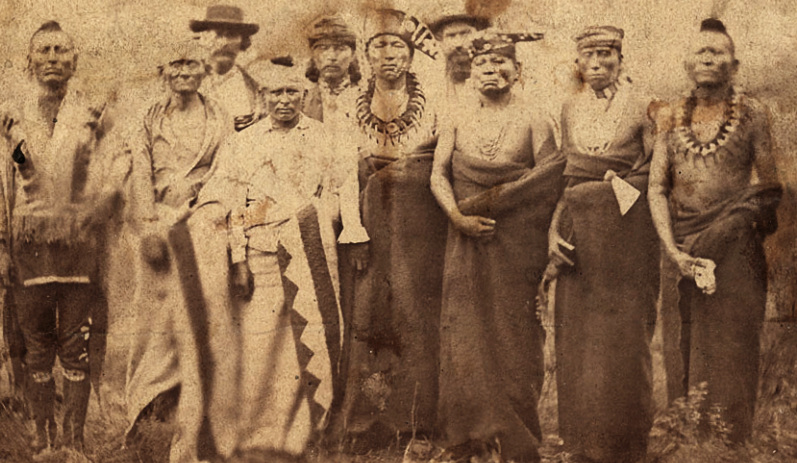
The history of the Skull Valley Band of Goshute Indians is an extraordinary narrative of adaptation to a harsh desert environment, survival against Euro-American encroachment, and a fierce determination to retain their political autonomy. The Goshute people—who traditionally refer to themselves as the Newe ("The People")—have inhabited the arid expanses of western Utah and eastern Nevada since time immemorial.
The arrival of white settlers and Mormon pioneers in the 1840s and 1850s disrupted the fragile desert ecosystem. Encroaching livestock destroyed the native plants and water sources essential to the Goshute hunter-gatherer lifestyle. This rapid depletion of resources led to desperate skirmishes and the brief Goshute War (1860–1863). Seeking peace, the Goshutes signed a treaty with the United States in 1863 at Tuilla (Tooele) Valley. Rather than ceding their territory, the treaty merely granted the U.S. travel routes through their land.
Despite repeated federal pressures to forcibly relocate the Goshutes to the Uintah Reservation or into Idaho, the Skull Valley people refused to abandon their ancestral home. Their persistence eventually forced the federal government to establish the Skull Valley Reservation by executive order in 1912.
Sources: Utah American Indian Digital Archives; National Park Service; "The Goshutes: We Shall Remain"
Ancient Echoes: The Spirit of the Goshute
The cultural foundation of the Skull Valley Goshutes is defined by an unparalleled mastery of desert survival. Historically labeled by early settlers as "diggers" due to their reliance on roots, the Goshutes were actually brilliant ethnobotanists.
Traditional Newe life was highly attuned to the seasons. The Goshutes harvested over 80 different species of wild plants for food, medicine, and masterful basketry. They constructed brush shelters called kahni, gathered nutrient-rich pine nuts in the autumn, and hunted antelope, rabbits, and small reptiles. To survive the fierce sun and insect bites, they frequently coated their skin in a protective layer of gray mud clay.
Today, the community preserves its identity through the enduring practice of traditional arts, ancestral storytelling, and adherence to the Native American Church. Despite centuries of assimilation policies, the modern Skull Valley Goshutes remain profoundly tied to the silence, ecology, and spirits of the West Desert.
Sources: Utah Division of Indian Affairs; Confederated Tribes of the Goshute Reservation Education Department

The Nuclear Battle and the Fight for Sovereignty
The modern legal history of the Skull Valley Band is characterized by a high-stakes, controversial battle over environmental justice and the limits of tribal sovereignty.
By the late 20th century, the Skull Valley Reservation found itself geographically ringed by hazardous facilities, including the military's Dugway Proving Ground (a chemical and biological weapons testing site), a magnesium plant, and a toxic waste incinerator. Trapped in a secluded landscape with a severely limited economic base, the tribal leadership in the 1990s looked toward an unconventional resource: their geographic isolation.
In 1997, the tribal executive committee entered into a lucrative lease agreement with Private Fuel Storage (PFS), a consortium of eight commercial nuclear power companies. The plan was to build an above-ground, temporary storage facility for 40,000 metric tons of high-level spent nuclear fuel on 98 acres of reservation land.
This sparked a monumental legal war:
The Tribal Debate: The move split the small tribe. Proponents argued it was a supreme exercise of tribal sovereignty that would bring millions of dollars to fund education, housing, and healthcare. Opponents—spearheaded by grassroots tribal members forming the group Ohngo Gaudadeh Devia ("Mountain Community")—argued it was an example of environmental racism that threatened their sacred land.
The State Confrontation: The State of Utah fiercely opposed the dump, utilizing every legislative and environmental roadblock possible to halt it.
Though the federal Nuclear Regulatory Commission (NRC) ultimately granted the license to store the waste, the fierce localized resistance, internal tribal leadership disputes, and federal political shifts caused the PFS project to be permanently withdrawn in 2012. The battle cemented the Skull Valley Goshutes in the national spotlight regarding indigenous land rights, sovereignty, and environmental ethics.
Sources: Nuclear Information & Resource Service (NIRS); Private Fuel Storage Legal Records; Journal of Lutheran Ethics
Tribal Lands
The contemporary land base of the Skull Valley Band of Goshute Indians remains focused on their designated reservation, which stands as an island of sovereign tribal territory within the heavily militarized and industrialized West Desert of Utah.
1. Skull Valley Indian Reservation
Significance: Covering 17,248 acres of arid land in Tooele County, this reservation rests at the base of the Stansbury Mountains. It is the political and historical heart of the band, where a small residential community resides alongside tribal infrastructure.
2. The Great Basin Desert & Tooele Valley
Significance: While primarily public or private land today, these expanses represent the vast ancestral hunting and foraging grounds of the Goshute people, rich with cultural heritage sites and geographic landmarks mentioned in tribal origin stories.
Parcel Location | Primary Use |
Skull Valley Reservation (Tooele County, UT) | Tribal Sovereignty Base, Residential Housing, Tribal Administration, Agricultural and Ecological Leasing |
Tooele, UT | Administrative Extensions, Inter-governmental Relations, Urban Tribal Citizen Support |
Stansbury & Cedar Mountains | Ancestral and Spiritual Homelands, Cultural Resource Gathering |
Sources: Bureau of Indian Affairs; U.S. Census Bureau

Learn More
🏛️ Museums & Cultural Centers
Natural History Museum of Utah (Salt Lake City, UT): Features dedicated exhibits highlighting the native peoples of the Great Basin, showcasing historical Goshute basketry, tools, and ecological knowledge.
Tooele Valley Museum (Tooele, UT): Offers historical context on the early interaction between Euro-American pioneers, the military, and the indigenous Goshute population of the valley.
📚 Essential Books
"The Goshute Indians" by James B. Allen and Ted J. Warner: An essential historical overview detailing the lifestyle of the Goshute people and their interactions with early settlers.
"What Justice? Whose Justice? Fighting for Fairness in the Commonwealth" (Features sections on the Skull Valley Nuclear Debate): Explores the intense legal, social, and ethical ramifications of the tribe’s modern struggle with Private Fuel Storage.
🎥 Documentaries & Videos
"We Shall Remain: The Goshute" (PBS / KUED): A powerful documentary film that captures the history of the Goshutes, exploring their survival in the desert and the deep divisions caused by the nuclear waste controversy.
🔗 Digital Resources & Links
Utah Division of Indian Affairs (indian.utah.gov): Provides official tribal profiles, statistical charts, and state-recognized histories of the Skull Valley Band.
Utah American Indian Digital Archives (UAIDA): A premier digital repository offering access to historical photographs, treaties, and oral histories corresponding to the Goshute people.

Comments