.png)
Tlingit Nation

Tlingit Totem Pole at Sitka. Source: Wikipedia / Sitka National Historical Park - Wikipedia Traditional Dugout Canoe. Source: Hakai Magazine / The Canoe in the Forest | Hakai Magazine Chilkat Blanket Weaving. Source: Alaska Magazine / Alaska Magazine | Chilkat Blanket Weaving Central Council of Tlingit & Haida Flag. Source: Tribal Nations Maps / Tlingit & Haida Central Counc
The Tlingit Nation at a Glance
Tribe Name: Tlingit (Lingít). The name translates to "People of the Tides," reflecting their deep ancestral connection to the coastal waterways of Southeast Alaska.
Language: Lingít.
Language Tree: Na-Dene language family.
Direct Relatives: The Tribe shares linguistic and ancestral roots with the Eyak and various Athabaskan peoples of the North American interior.
Enrollment: The Central Council of the Tlingit & Haida Indian Tribes of Alaska, the regional tribal government, has over 35,000 enrolled citizens globally.
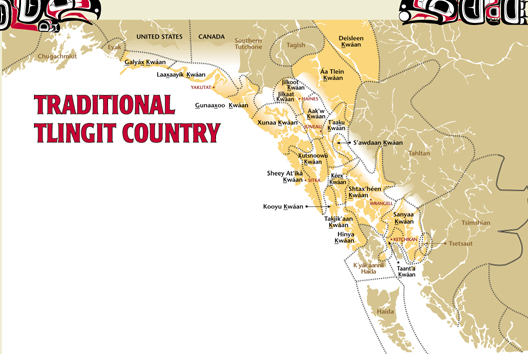
Land Ownership: Their ancestral homelands span the coastal panhandle of Southeast Alaska. Today, tribal land is managed through a complex system established by the Alaska Native Claims Settlement Act (ANCSA), encompassing regional and village corporation lands, as well as tribally owned parcels in communities like Juneau, Sitka, and Hoonah.
Sources: Central Council of Tlingit & Haida Indian Tribes of Alaska; Sealaska Heritage Institute; Bureau of Indian Affairs.
Brief History
The history of the Tlingit Nation is a testament to the enduring strength of a people deeply tied to the temperate rainforests and coastal waters of Southeast Alaska. For thousands of years prior to European contact, the Lingít lived in harmony with the abundant marine and forest ecosystems. Their highly organized society thrived on the seasonal harvesting of salmon, halibut, berries, and cedar, allowing for the development of rich artistic traditions and complex social structures centered around permanent winter clan houses.
The arrival of Russian fur traders in the 18th century brought devastating changes, including introduced diseases and violent conflicts, most notably the 1804 Battle of Sitka. Following the United States' purchase of Alaska in 1867, the Tlingit faced intense assimilation efforts, including the suppression of traditional practices and the forced removal of children to boarding schools. Despite these hardships, Tlingit leaders organized fiercely. In 1912, they formed the Alaska Native Brotherhood (ANB), one of the earliest Indigenous civil rights organizations in North America, to fight for citizenship, land rights, and the desegregation of Alaskan schools.
By the late 20th century, the Tlingit emerged as a powerful force for Native self-determination. The passage of the Alaska Native Claims Settlement Act (ANCSA) in 1971 fundamentally altered their land tenure, establishing corporate ownership of ancestral lands. Today, the Central Council of the Tlingit and Haida Indian Tribes of Alaska manages its own tribal affairs, heavily investing in the health, education, and economic sovereignty of its citizens while ensuring that traditional clan structures and customary laws remain respected.

Ancient Echoes: The Spirit of the Tlingit
The cultural foundation of the Tlingit people is inseparable from the ocean, rivers, and old-growth forests of the Pacific Northwest Coast. Their society is rooted in a matrilineal clan system, divided into two primary moieties: the Raven (Yéil) and the Eagle/Wolf (Ch'aak'/Gooch). This system of balance dictates everything from marriages to ceremonial obligations, ensuring a profound social web of reciprocity.
Historically, the Tlingit were master innovators of monumental cedar carving and weaving, highly specialized arts that recorded clan histories and spiritual lineages. The creation of towering totem poles (kootéeyaa), bentwood boxes, and intricately woven Chilkat and Ravenstail robes were not just artistic endeavors, but vital legal and historical documents. The potlatch, or Koo.éex', remains the central ceremonial institution—a complex gathering of feasting, giving away wealth, naming, and mourning that solidifies social status and clan alliances.
Today, the spirit of the Tlingit thrives through the revitalization of the Lingít language and the continued practice of customary harvesting. The passing down of traditional ecological knowledge, the resurgence of formline design, and the honoring of ancestral teachings (Haa Shuká) remain central to community life, proving that their cultural identity is not a relic of the past, but a living, breathing reality.
Protectors of the Tongass and Sovereignty
The modern Tlingit Nation is globally recognized for its fierce environmental stewardship and unwavering defense of subsistence rights, positioning themselves as frontline defenders of the Tongass National Forest and its marine ecosystems.
Recognizing that their cultural survival is intertwined with the health of the land and water, the Tlingit have fought high-profile battles against industrial threats to their homelands:
Defending the Tongass: The Tlingit have continually fought to protect the old-growth forests of the Tongass from aggressive clear-cut logging. Through legal advocacy and environmental partnerships, tribes have pushed to reinstate protections like the Roadless Rule, safeguarding traditional hunting, gathering, and fishing grounds from destructive timber sales.
Herring and Salmon Protection: Tribes such as the Sitka Tribe of Alaska have been at the forefront of efforts to protect the sacred Pacific herring (yaaw) from commercial overfishing. Because herring eggs are a cornerstone traditional food, the tribe has engaged in legal battles with the state to ensure sustainable management and prioritize subsistence rights over commercial interests.
Through these monumental efforts, the Tlingit Nation has demonstrated that Indigenous sovereignty is one of the most powerful tools for environmental protection in the modern era.
Tribal Lands
The modern Tlingit land base reflects a deep connection to the coastal environment, serving as both an economic engine and a cultural sanctuary.
Parcel Location | Primary Use |
Southeast Alaska Villages (Hoonah, Sitka, Yakutat, etc.) | Traditional gathering, subsistence hunting/fishing, village corporation enterprises and housing |
Juneau (Central Council Headquarters) | Tribal Government Center, Tribal Court, Healthcare Clinics, and Family Services |
Regional Native Corporation Lands (Sealaska) | Economic Sovereignty, Sustainable Timber Management, Carbon Offset Projects, Commercial Enterprises |
Learn More
🏛️ Museums & Cultural Centers
Sealaska Heritage Institute (Juneau, AK): A premier cultural organization that respectfully highlights the history, traditional arts, and contemporary works of the Tlingit, Haida, and Tsimshian peoples. Its Walter Soboleff Building is a profound hub for Indigenous studies.
Sitka National Historical Park (Sitka, AK): Preserves the site of the 1804 Battle of Sitka and features an extensive collection of Tlingit totem poles set along a coastal trail.
📚 Essential Books
"Haa Shuká, Our Ancestors: Tlingit Oral Narratives" by Nora Marks Dauenhauer and Richard Dauenhauer: A foundational collection of Tlingit history and storytelling, presented in both Lingít and English.
"The Tlingit Indians" by George Thornton Emmons: An extensive, detailed anthropological study of traditional Tlingit culture, social structures, and technology.
🔗 Digital Resources & Links
Central Council of Tlingit & Haida Official Website (ccthita-nsn.gov): The official portal for the tribal government, providing updates on community services, natural resource management, and leadership.
Sealaska Heritage Institute (sealaskaheritage.org): A non-profit organization supporting the community through educational programs, language revitalization initiatives, and cultural arts support.
References & Source Material
Historical & Cultural Texts
Emmons, George Thornton. The Tlingit Indians. University of Washington Press. (Foundational study of traditional Tlingit social structures, harvesting, and clan houses).
Dauenhauer, Nora Marks, and Richard Dauenhauer. Haa Shuká, Our Ancestors: Tlingit Oral Narratives. Sealaska Heritage / University of Washington Press. (Collection of Tlingit history, clan structures, and storytelling).
Tribal Governance & Cultural Archives
Central Council of Tlingit & Haida Indian Tribes of Alaska (CCTHITA): Enrollment data, official history, and modern tribal governance structures.
Sealaska Heritage Institute: Cultural archives detailing the matrilineal clan system, Lingít language revitalization, and formline design resources.
Sealaska Corporation: Land management, economic enterprises, and regional corporate structure details.
Burke Museum of Natural History and Culture: Archives and collections detailing traditional cedar carving, Chilkat, and Ravenstail weaving techniques.
Historical Events & Legislation
National Park Service: Sitka National Historical Park: Historical records regarding the Russian fur trade era and the 1804 Battle of Sitka.
Alaska Native Brotherhood (ANB): Historical documentation on the founding of the ANB in 1912 and the early fight for Indigenous civil rights in Alaska.
ANCSA Regional Association: Legislative history regarding the Alaska Native Claims Settlement Act (ANCSA) of 1971 and the shift to Native corporate land ownership.
Environmental Sovereignty & Legal Advocacy
Earthjustice: Defending the Tongass National Forest (Organized Village of Kake v. USDA): Legal filings and policy records detailing Southeast Alaskan tribes' ongoing battles to uphold the Roadless Rule and protect old-growth forests.
KCAW News: Sitka Tribe of Alaska Herring Case: Public reporting on the Sitka Tribe's legal fight to prioritize traditional subsistence harvesting of Pacific herring (yaaw) eggs over state-managed commercial fisheries.
Tags:
alaska salmon tlingit lingit 1971 tongass koo.eex

Comments