
The Little River Band of Ottawa Indians


The Little River Band of Ottawa Indians at a Glance
Tribe Name: Little River Band of Ottawa Indians (Gaá Chíng Ziíbíng Anishinaabek). Gaá Chíng Ziíbíng translates to "At the Little River," reflecting ancestral roots centered around the river valleys flowing into Lake Michigan.
Language: Anishinaabemowin (Odawa dialect).
Language Tree: Algonquian (Central Algonquian branch).
Direct Relatives: As historic members of the Council of Three Fires (Niswi-mishkodewinan), the Odawa share close linguistic, cultural, and political ties with the Ojibwe (Chippewa) and Potawatomi (Bodéwadmi) nations, as well as neighboring Odawa bands across Michigan and Ontario.
Enrollment: Over 1,200 enrolled tribal citizens.
Land Ownership: Tribal homelands and trust lands are centered in northwestern Lower Michigan, primarily within Manistee and Mason counties, with administrative headquarters located along the Manistee River watershed.
Sources: Little River Band of Ottawa Indians Government; Michigan Department of Civil Rights; U.S. Bureau of Indian Affairs; Library of Congress (Public Law 103-324).

Feel free to right click, download, and share this graphic!
Brief History
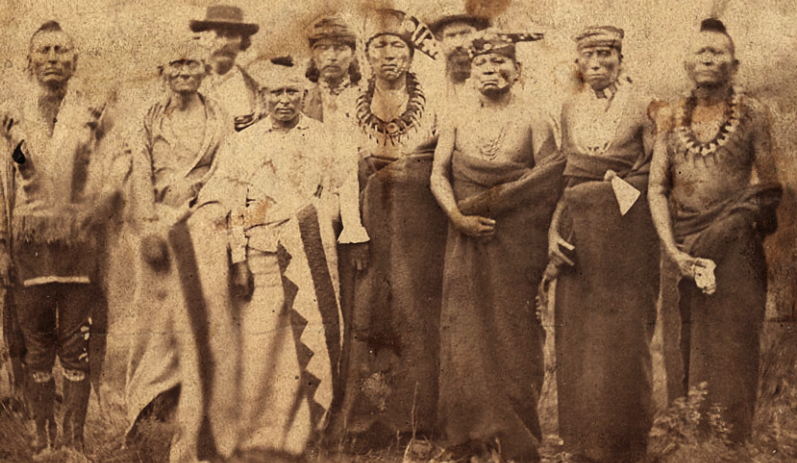
The history of the Little River Band of Ottawa Indians is rooted along the rivers, lakes, and forests of western Lower Michigan. Renowned as master navigators and traders—the name Odawa derives from the Anishinaabe word meaning "traders"—they maintained vast commercial and diplomatic networks across the Great Lakes basin. The Anishinaabek practiced seasonal migration, wintering in sheltered interior hunting grounds and gathering at coastal villages in spring and summer to fish, harvest maple sugar, cultivate corn, and gather natural resources.
The 19th century brought intense pressure from Euro-American settlement and federal removal policies. Through the Treaty of Washington (1836) and the Treaty of Detroit (1855), the Little River Ottawa negotiated to retain reservation lands in Manistee and Mason counties rather than accept forced removal west of the Mississippi River. Despite these agreement protections, federal authorities illegally declared tribal administrative structures terminated in the late 19th century and allowed non-Native settlers to encroach on reserved tribal lands.
Throughout the 20th century, Little River citizens maintained their community integrity, cultural traditions, and political identity despite federal non-recognition. Through decades of persistent activism, tribal leaders secured federal reaffirmation on September 21, 1994, when President Bill Clinton signed the Little River Band of Ottawa Indians Act (Public Law 103-324). Reestablishing their sovereign status, the nation adopted a modern constitution and built a self-governing administration headquartered in Manistee, Michigan.
Ancient Echoes: The Spirit of the Anishinaabek
The spiritual and moral foundation of the Little River Band revolves around reverence for Gichi-Manidoo (the Great Spirit) and adherence to the Seven Grandfather Teachings: Wisdom (Nbwaakaawin), Love (Zaagidwin), Respect (Mnaadendimowin), Bravery (Aakdehewin), Honesty (Gwekwaadziwin), Humility (Dbaadendizwin), and Truth (Debwewin). Traditional society is further organized by clan (Doodem) affiliations, which assign specific leadership, ecological, and community roles to maintain social balance.
Visual and ceremonial arts remain vital expressions of Odawa identity. Master artisans pass down traditions of intricate black ash basketry, porcupine quillwork on birchbark, and floral beadwork. Every year, the community gathers for the annual Jiingtamok (Powwow), where drum groups, ceremonial dancers, and elders celebrate resilience, honor ancestors, and pass cultural knowledge to younger generations.

Modern Horizons: Sovereignty & Sustainability
Today, the Little River Band of Ottawa Indians operates a tripartite constitutional government featuring Executive, Legislative (Tribal Council), and Judicial branches. The tribal government manages comprehensive public programs, including healthcare at the Little River Health Clinic, tribal housing, educational scholarships, elder services, and law enforcement.
Environmental stewardship is a primary focus of tribal sovereignty. The LRBOI Natural Resources Department is nationally recognized for its restoration of the Nmé (Lake Sturgeon)—a sacred clan species—establishing the world's first Streamside Rearing Facility on the Manistee River to revitalize wild sturgeon populations. Alongside ecological programs, cultural and language preservation efforts thrive through community Anishinaabemowin classes, immersion initiatives, and youth camps. Economic enterprises, such as the Little River Casino Resort, generate revenue to fund tribal government operations and foster regional economic development.

Tribal Land & Homelands
The historical homelands of the Little River Band of Ottawa Indians were defined by the diverse ecosystems of Michigan's western Lower Peninsula:
East (Interior Pine & Hardwood Forests): Winter hunting grounds, sugarbushes, and inland river transport routes connecting to interior watersheds.
North (Northern Great Lakes Basin): Coastal trading corridors and seasonal gathering areas extending toward the Straits of Mackinac.
West (Lake Michigan Shoreline & Dunes): Sacred coastal sand dunes, river mouths, and open waters utilized for fishing, seasonal village sites, and maritime commerce.
South (Muskegon & Grand River Basins): Southern river valleys providing fertile agricultural soils, trade networks, and shared inter-tribal council grounds.
Centered in Manistee and Mason counties, the modern tribal land base includes administrative complexes, health facilities, tribal housing sectors, economic developments, and protected conservation zones along the Manistee River watershed.
Learn More & Resources
Little River Band of Ottawa Indians Official Government Portal: lrboi-nsn.gov
LRBOI Cultural Preservation Department: lrboi-nsn.gov/government/departments/cultural-preservation
LRBOI Natural Resources Department & Sturgeon Program: lrboi-nsn.gov/natural-resources
Little River Health Clinic: Manistee, Michigan
Little River Casino Resort: Manistee, Michigan
References & Sources
Little River Band of Ottawa Indians. Constitution of the Little River Band of Ottawa Indians. Manistee, MI.
United States Congress. Public Law 103-324: Little River Band of Ottawa Indians Act (108 Stat. 2156). Washington, D.C.
McClurken, James M. Our People, Our Journey: The Little River Band of Ottawa Indians. Michigan State University Press.
U.S. Bureau of Indian Affairs. Michigan Agency Trust Land & Treaty Records (Treaty of Washington 1836; Treaty of Detroit 1855).
Michigan Department of Civil Rights. Report on Historical Michigan Tribal Nations and State Relations.


Comments