.png)
Oglala Lakota

Updated: Mar 8
Quick Facts
Tribal Name: Oglala Lakota
Language: Lakȟótiyapi (Lakota)
Language Group: Siouan (Western Dakota)
Enrollment: ~47,000
Location: Pine Ridge Reservation, South Dakota
Official Website: oglalalakotanation.info
History

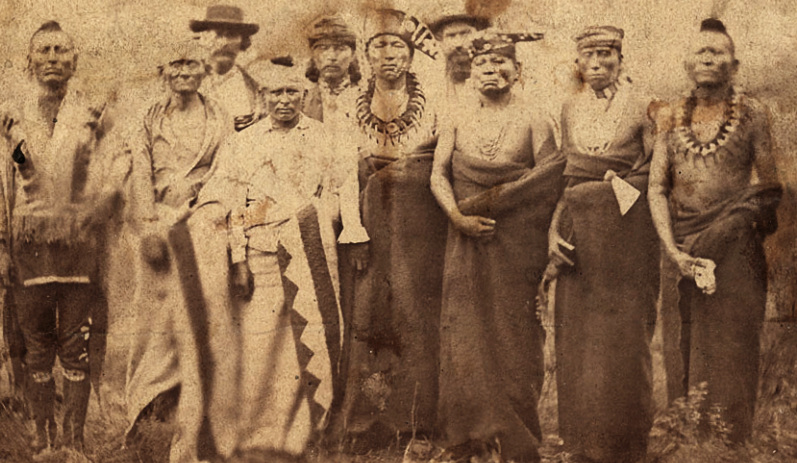
The Oglala Lakota, whose name translates to "to scatter one's own," are one of the seven subtribes of the Lakota people who historically dominated the northern Great Plains. Originally migrating from the Great Lakes region, they transitioned into a formidable equestrian culture in the 18th century, centered on the buffalo (Tatanka). Throughout the 19th century, Oglala leaders like Red Cloud and Crazy Horse became legendary for their resistance against U.S. expansion, most notably during Red Cloud's War and the Battle of the Little Bighorn. However, following the 1868 Fort Laramie Treaty, the tribe faced intensifying pressure, culminating in the tragic Wounded Knee Massacre in 1890. Despite decades of forced assimilation and economic hardship, the Oglala Lakota have remained a powerful symbol of Indigenous resilience, leading modern movements for treaty rights and cultural reclamation from their base on the Pine Ridge Reservation. Source: Oglala Sioux Tribe History (oglalalakotanation.info)
Cultural Heritage

Lakota culture is anchored by the spiritual philosophy of Mitákuye Oyás'iŋ—"All My Relations"—which teaches the interconnectedness of all living things. Central to their spiritual life are the Seven Sacred Rites, including the Wiwányang Wačhípi (Sun Dance) and the Inipi (Purification Ceremony), which were once banned by the U.S. government but have seen a massive resurgence in recent decades. Artistically, the Oglala are renowned for their intricate quillwork and beadwork, often featuring geometric patterns that tell ancestral stories. The buffalo remains the most sacred cultural icon, representing the source of life, and modern tribal initiatives focus on restoring buffalo herds to the prairie to heal both the land and the people. To preserve these traditions, the Oglala Lakota College and various tribal centers prioritize the teaching of the Lakota language and oral histories to the younger generations. Source: Akta Lakota Museum & Cultural Center (aktalakota.stjo.org)
Recognition and Treaties
The Oglala Lakota Nation is a federally recognized sovereign tribe with a government established under the Indian Reorganization Act of 1934. Their legal relationship with the United States is primarily defined by the 1851 and 1868 Fort Laramie Treaties, which recognized the Black Hills (Paha Sapa) as part of their permanent territory. The tribe has never accepted the $1 billion-plus settlement offered by the U.S. Supreme Court in 1980 for the illegal seizure of the Black Hills, maintaining that "The Black Hills are Not for Sale" and demanding the return of the land instead. Today, the tribal government operates out of Pine Ridge, South Dakota, managing its own judicial system, schools, and health services while continuing to advocate for the strict fulfillment of historical treaty obligations. Source: Smithsonian National Museum of the American Indian (americanindian.si.edu)
Relatives and Neighbors
The Oglala are part of the Oceti Šakówiŋ (Seven Council Fires), a confederacy that includes the Dakota and Nakota peoples. They share close linguistic and kinship ties with other Lakota bands such as the Sicangu (Rosebud) and Hunkpapa (Standing Rock). Historically, the Lakota maintained a long-standing alliance with the Cheyenne and Arapaho tribes, frequently joining forces for hunting and defense. Today, the Pine Ridge Reservation shares borders with the Rosebud Sioux Reservation to the east and the Badlands National Park, creating a vast landscape of interconnected Indigenous communities across the northern plains. Source: South Dakota State Historical Society (history.sd.gov)
Reservation Lands

The Pine Ridge Reservation encompasses approximately 3,500 square miles, making it the eighth-largest reservation in the United States. The landscape is a striking mix of rolling short-grass prairies, pine-covered ridges, and the dramatic, rugged peaks of the Badlands. It is home to significant historical sites, including the Wounded Knee National Historic Landmark.
Resources
Educational Websites & Digital Resources
The Official Oglala Sioux Tribe Website
Link: oglalalakotanation.info
Oglala Lakota College (Heritage Center)
Link: olc.edu
The Lakota Language Consortium
Link: lakotadictionary.org
Recommended Books
Black Elk Speaks by John G. Neihardt
The Heart of Everything That Is: The Untold Story of Red Cloud by Bob Drury and Tom Clavin
Bury My Heart at Wounded Knee by Dee Brown
Lakota Woman by Mary Crow Dog

Comments