.png)
Eastern Band of Cherokee Indians
- Feb 21
- 3 min read



Quick Facts
Tribal Name: Aniyvwiya / ᏣᎳᎩ
Language: Jalagi / Tsalagi
Language Group: Iroquoian
Enrollment: 16,000+
Location: North Carolina
Official Website: www.ebci.com
History

The Eastern Band of Cherokee Indians (EBCI) are the descendants of the Cherokee people who remained in their ancestral homelands in the mountains of western North Carolina, resisting the forced relocation known as the Trail of Tears in the 1830s. Long before European contact, the Cherokee Nation controlled a vast territory encompassing parts of eight modern southeastern states. During the Indian Removal Act of 1830, the US government forced the majority of the Cherokee population to march west to Indian Territory (modern-day Oklahoma). However, a small group, aided by figures like Tsali who sacrificed his life for his people's right to remain, hid in the Great Smoky Mountains. Others were allowed to stay because they did not live on communal tribal lands at the time. Over decades, these remaining families pooled their money to purchase back a fraction of their ancestral land, known today as the Qualla Boundary. Unlike a traditional reservation created by the federal government, the Qualla Boundary is land the EBCI bought themselves, which was later placed into federal trust. Today, they are a sovereign, thriving nation that has successfully preserved their rich heritage despite immense historical adversity. Source: Eastern Band of Cherokee Indians History (ebci.com)
Cultural Heritage

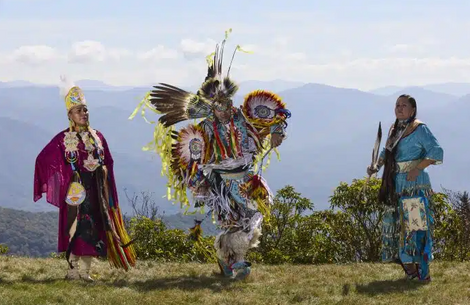
A cornerstone of EBCI cultural heritage is their extraordinary tradition of making handmade crafts, serving as both a vital connection to their ancestors and a profitable livelihood for modern artisans. While world-renowned for their complex rivercane and white oak basketry, their intricate beadwork and jewelry making are equally spectacular. Cherokee artists use tiny glass seed beads, shells, and natural stones to create stunning, deeply symbolic jewelry, regalia, and wearable art. These crafts require immense patience, precision, and an understanding of traditional color palettes and patterns. To protect and promote these handmade traditions, the tribe founded the Qualla Arts and Crafts Mutual in 1946. It is the oldest Native American artisans' cooperative in the United States, ensuring that genuine Cherokee artistry, from seed bead jewelry to woodcarving, continues to thrive and support the community. Source: Qualla Arts and Crafts Mutual (quallaartsandcrafts.com)
Recognition and Treaties
The Eastern Band of Cherokee Indians is a federally recognized sovereign nation, politically distinct from the Cherokee tribes in Oklahoma. Their status was solidified in the decades following the Trail of Tears when the US government recognized them as an independent entity in 1868. The federal government holds the 56,000-acre Qualla Boundary in trust for the tribe. Because they purchased this land themselves rather than having it assigned by a treaty, they possess unique jurisdiction over their territory. They maintain a government-to-government relationship with the United States, operating their own legal system, schools, and essential services. Source: Bureau of Indian Affairs Tribal Directory (bia.gov)
Relatives and Neighbors
The EBCI is one of three federally recognized Cherokee tribes. Their closest relatives are the Cherokee Nation and the United Keetoowah Band of Cherokee Indians, both located in Oklahoma as a result of forced removal. Together, these three nations share the same ancestral roots and Iroquoian language family. Regionally, their closest federally recognized Indigenous neighbor in the Carolinas is the Catawba Indian Nation in South Carolina. Source: Cherokee Preservation Foundation (cherokeepreservation.org)
Reservation Lands

Resources
Educational Websites & Digital Resources
The Official Eastern Band of Cherokee Indians Website
Link: ebci.com
Museum of the Cherokee Indian
Link: mci.org
Qualla Arts and Crafts Mutual
Link: quallaartsandcrafts.com
Recommended Books
Cherokee Women: Gender and Culture Change, 1700-1835 by Theda Perdue
Living Stories of the Cherokee collected and edited by Barbara R. Duncan
Cherokee Americans: The Eastern Band of Cherokees in the Twentieth Century by John R. Finger
History of the Cherokee Indians by Emmet Starr


Comments