.png)
The Pamunkey Indian Tribe

Quick Facts
Tribal Name: Powhatan
Language: Powhatan
Language Group: Algonquian
Enrollment: 500+
Location: Virginia
Official Website: https://pamunkey.org/
History

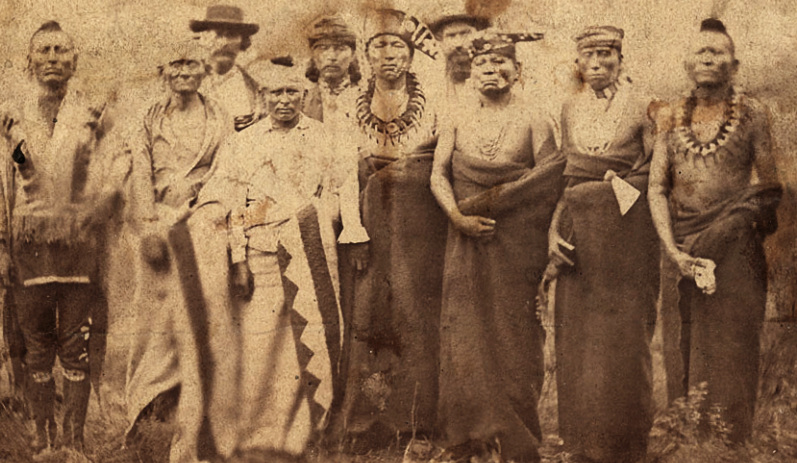
The Pamunkey Indian Tribe is one of the most historically significant indigenous nations on the East Coast. Long before English settlers arrived at Jamestown in 1607, the Pamunkey were the most powerful tribe within the great Powhatan Paramount Chiefdom, which encompassed over 30 Algonquian-speaking tribes in the Chesapeake Bay region. Chief Powhatan and his famous daughter, Pocahontas, were both of Pamunkey descent. The early years of English colonization were marked by both trade and devastating conflict as settlers rapidly expanded into native lands. Following the bloody Anglo-Powhatan Wars, the Pamunkey signed the Treaty of Middle Plantation in 1677, which guaranteed their right to a reservation on the Pamunkey River. Despite centuries of encroachment, legal disenfranchisement—including Virginia’s notorious Racial Integrity Act of 1924, which attempted to erase their identity on paper—and economic hardship, the Pamunkey fiercely protected their reservation. Through sheer resilience, they maintained their sovereign identity and remain deeply tied to their ancestral river. https://pamunkey.org/history-culture/
Cultural Heritage

A unique and enduring hallmark of Pamunkey cultural heritage is their traditional pottery. For centuries, Pamunkey artisans have gathered clay from the banks of the Pamunkey River, a vital waterway that has sustained their people since time immemorial. The tribe's pottery is traditionally not made using a potter's wheel; instead, it is hand-built using a traditional coil-and-scrape method or pressed into molds. Historically, the clay was tempered with crushed mussel shells and fired in open pits, giving it a distinctive mottled appearance. In 1931, the tribe established the Pamunkey Indian Pottery School to preserve this vital craft. Today, their pottery stands as a testament to their continuous occupation of their homelands and remains a tangible link connecting modern Pamunkey people to the artistry of their ancestors.Pamunkey Indian Tribe Pottery Guild (pamunkey.org/pottery)
Recognition and Treaties
The Pamunkey hold a unique place in US history due to their long-standing treaty relationship. They signed the historic Treaty of Middle Plantation with the English Crown in 1677, long before the United States existed. This treaty guaranteed their reservation lands and established an enduring tradition: every year, the tribe presents a "tribute" of wild game (usually a deer or turkey) to the Governor of Virginia in lieu of taxes. Despite this unbroken history and centuries of state recognition, the Pamunkey were not granted full Federal Recognition until 2015, making them the first federally recognized tribe in the state of Virginia. Source: U.S. Federal Register, Bureau of Indian Affairs (80 FR 39144)
Relatives and Neighbors
The Pamunkey are part of a larger network of Algonquian-speaking tribes indigenous to Virginia's coastal plain, historically united under the Powhatan Chiefdom. Their closest historical and geographic relatives include the Mattaponi, who share a neighboring reservation, as well as the Upper Mattaponi, Chickahominy, Eastern Chickahominy, Nansemond, and Rappahannock tribes. Together, these descendant nations maintain strong cultural ties and share a deeply rooted heritage defined by the tidal rivers of the Chesapeake Bay. Source: Encyclopedia Virginia (encyclopediavirginia.org)
Reservation Lands

Resources
Educational Websites & Digital Resources
The Official Pamunkey Indian Tribe Website
Link: pamunkey.org
Smithsonian Native Knowledge 360° (NK360) – "Life Along the River"
Virginia Department of Education – Virginia's First People
Link: doe.virginia.gov
Recommended Books
Pocahontas's People: The Powhatan Indians of Virginia Through Four Centuries by Helen C. Rountree
Focus: This is widely considered the definitive scholarly text on the Powhatan paramount chiefdom and the survival of tribes like the Pamunkey. It traces their history from pre-contact through the 20th century.
Pamunkey Speaks: Native Perspectives by Kenneth Bradby Jr.
Focus: Written by a Pamunkey tribal citizen, this book is vital because it centers on direct, contemporary Native perspectives and oral histories rather than just relying on outside anthropologists.
Breaking the House of Pamunkey: The Final Powhatan War and the Fall of an American and Indian Empire by Lars C. Adams
Focus: An in-depth look at the complex political maneuvering, the Anglo-Powhatan Wars, and the subsequent treaties that shaped the early reservation era for the tribe.
The Pamunkey Indians of Virginia by John Garland Pollard
Focus: Originally published in 1894, this is a classic ethnographic text. While it provides valuable late-19th-century historical context and observations of their fishing and pottery practices, it is best studied alongside modern Native perspectives to account for the era in which it was written.

Comments