.png)
Bear Root: A Journey into the Heart of Traditional Healing

Updated: Mar 3
For countless generations, the earth has provided everything we need to heal, protect, and sustain our communities. The deep woods, high plains, and alpine meadows are not just landscapes—they are our original pharmacy, grocery store, and greatest teachers. Long before modern clinics existed, Indigenous healers understood the complex chemistry and spiritual power of the plants growing right beneath our feet. This relationship is built on profound respect, careful observation, and a reciprocal balance with the natural world.
Today, as we work to light the path for the next generation, reclaiming and sharing this traditional ecological knowledge is more vital than ever. The teachings of our plant medicines are not just history; they are a living, breathing part of our cultural survival. When we learn to identify a sacred root, understand its medicinal properties, and practice the ethical harvesting methods of our ancestors, we do more than heal a physical ailment. We keep our traditions alive, honor the earth, and ensure that this hard-won wisdom is preserved for our children and the generations yet to come.
One of the most powerful, respected, and widely utilized medicines across the varied landscapes of North America is a plant deeply connected to the strength and healing power of the bear. Known as Bear Root, Osha, or Ligusticum porteri, this sacred guardian of the mountains is a testament to the profound healing knowledge held within our traditions.
Bear Root: The Sacred Guardian of the Mountains

The official scientific name for this powerful perennial herb is Ligusticum porteri. The name "Bear Root" originates from the traditional observation that bears actively seek out and dig up the roots upon waking from winter hibernation. They consume it to stimulate their digestion and chew it into a paste to rub into their fur for protection. Across various languages, the plant's name reflects this deep connection to the bear. It is known as Anshe (bear) by the Zuni, ha 'il chii' gah by the White Mountain Apache, kwiyag'atu tukapi by the Ute, and Chuchupate (an Aztec term for bear medicine).
Botanical Identification
Common Names: Bear Root, Osha, Chuchupate, Porter's Lovage, Colorado Cough Root, Mountain Ginseng, Indian Parsley.
Latin Name: Ligusticum porteri
Plant Species: It is a perennial herb belonging to the Apiaceae family (the carrot and parsley family).
Known Habitat: Bear root thrives at high elevations—typically between 7,000 and 10,000 feet. It is native to the Rocky Mountains, ranging from Wyoming down through Colorado, New Mexico, Arizona, Utah, Nevada, and into northern Mexico. It prefers deep, rich, moist soils found in subalpine meadows and alongside aspen or conifer groves.
How to Correctly Identify Bear Root
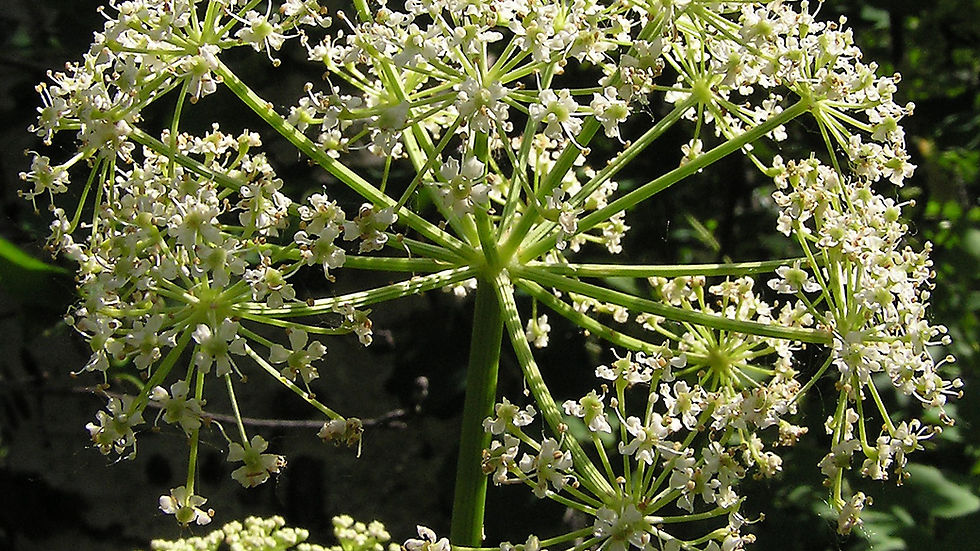
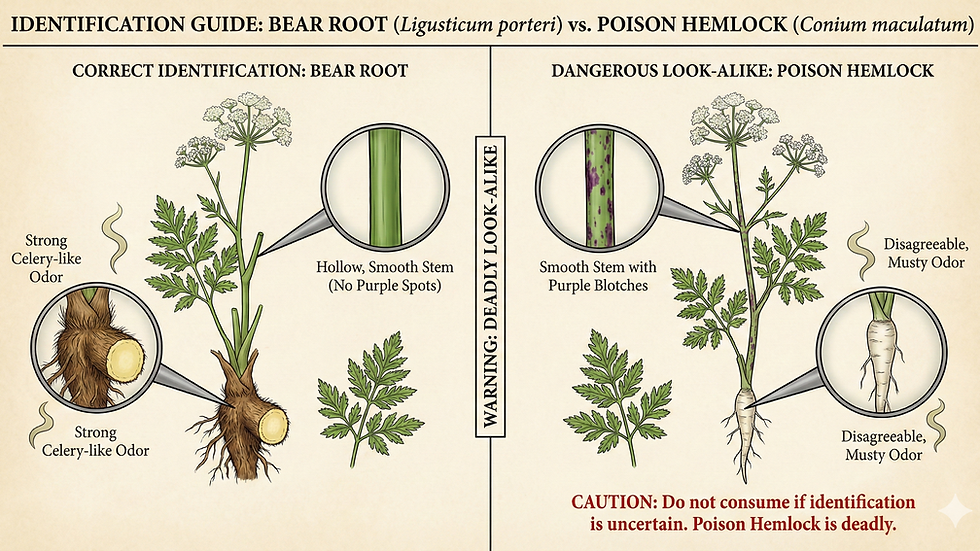
Correctly identifying Bear Root in the wild requires careful attention to both its physical features and its distinct scent. The plant features highly divided, fern-like leaves typical of the parsley family and grows from a thick, dark, deeply wrinkled, and hairy taproot. A key visual identifier is its stem, which is hollow, green, and distinctly smooth.
However, the most reliable identifier is its smell; the entire plant, and particularly the root, emits a very strong, spicy, celery-like fragrance. It is absolutely critical to check for this scent and to ensure the stems are completely free of purple blotches.
Critical Precautions
Deadly Look-alikes: Bear root leaves look almost identical to Poison Hemlock (Conium maculatum) and Water Hemlock (Cicuta species), which are among the most deadly, acutely toxic plants in North America. If the stem has purple spots or if the plant emits a musty, disagreeable odor rather than a spicy celery scent, it is likely Poison Hemlock. Proper identification is a matter of life and death.
Pregnancy: It should not be used by pregnant women, as it contains compounds that can stimulate the uterus and potentially induce a miscarriage.
Traditional American Indian Use
Bear root is one of the most widely respected and utilized traditional medicines in North America. It has been used for centuries by the Apache, Navajo (Diné), Zuni, Pueblo, Southern Ute, Lakota, Tarahumara, Comanche, Yaqui, and Flathead tribes, among others. Indigenous healers relied on the root as a frontline defense against severe respiratory and viral infections. It was used to treat pneumonia, bronchitis, severe coughs, and colds. Because it powerfully opens the airways, it was also a standard treatment for altitude sickness and asthma. Beyond respiratory care, it was used to settle severe stomach aches, numb toothaches, relieve the pain of rheumatism, and provide runners and hunters with increased lung capacity and physical endurance.
How to Harvest Responsibly
Because of its high demand and very specific growing conditions, Bear root is facing severe overharvesting and is considered an "at-risk" plant. Cultivating it in greenhouses has proven incredibly difficult, meaning almost all Bear root is wild-harvested. Traditional ecological knowledge dictates strict ethical harvesting practices. Gatherers should never take the main taproot (the "mother" root); instead, they should carefully dig around the plant and harvest only a few secondary lateral roots so the plant can survive and heal.
Once harvested, the soil must be carefully replaced, and seeds from the mature plant should be scattered in the disturbed earth to encourage the next generation. It is widely taught that one should only take what is needed for personal or community use, leaving plenty behind for the bears, the ecosystem, and the future.

Safely Preparing Bear Root for Medicinal Use
Once you have positively identified and ethically harvested Bear Root, proper preparation is essential. Because this plant is so potent, a little goes a long way.
Cleaning and Processing
Freshly harvested Bear Root is covered in dirt and has a very hairy outer texture. Use a stiff brush to scrub away the soil, but avoid soaking the root in water. Slice or chop the root while it is still fresh (once dry, it becomes incredibly hard). Lay the freshly cut pieces out in a warm, dry place out of direct sunlight until completely brittle. Store in an airtight glass jar in a cool, dark cabinet.
The Traditional Decoction (Tea)
Add roughly one tablespoon of dried, chopped root to two cups of water. Bring it to a boil, then reduce the heat and let it gently simmer for 20 to 30 minutes. Strain the woody pieces out. The resulting liquid will be strong, spicy, and very aromatic—perfect for breaking up deep chest congestion.
Creating a Tincture
Fill a small glass jar about one-third full of dried, chopped root, and cover it completely with a high-proof alcohol (like vodka) or vegetable glycerin. Seal the jar and place it in a cool, dark place for 4 to 6 weeks, shaking it daily. Strain the liquid into a dropper bottle.
Direct Chewing
The most ancient and immediate method. For a severe sore throat, altitude sickness, or a sudden sinus headache, place a small, pea-sized piece of the dried root in your mouth and slowly chew it. Allow the spicy juices to coat your throat. Spit the fibrous pulp out once the numbing sensation fades.
Syrups
Ground root was frequently mixed with honey to create a soothing cough syrup that preserved the plant's volatile oils for winter use.
Poultices and Salves
The root can be ground into a fine powder and mixed with warm water, bear grease, or pine pitch to create a topical paste. It can also be infused into a carrier oil using very low heat, then blended with melted beeswax to create a drawing and pain-relieving salve for cuts, scrapes, and aching joints.
Other Traditional Uses
Spiritual Protection
The root is considered a powerful spiritual shield. It is frequently burned as an incense or smudge to purify the air, bless a ceremonial space, and ward off negative energies or illness. Many people carry a small piece of the root in a medicine pouch as a protective talisman.
Pest Deterrent
The intensely pungent aroma of the root is naturally offensive to many pests. Pieces of the root were often tied around the ankles, woven into clothing, or placed in moccasins to repel rattlesnakes, ticks, and other biting insects.
Culinary Uses
While the root is strongly medicinal, the young leaves and seeds of the plant possess an earthy, celery-like flavor and were historically used to season soups, stews, beans, and meats.
Conclusion
As we reconnect with our heritage, understanding the uses and significance of Bear Root is essential. This sacred plant embodies the wisdom of our ancestors and the healing power of nature. By respecting and preserving these traditions, we empower future generations to embrace their cultural identity and the gifts of the earth.
References
Kindscher, K., & Native Medicinal Plant Research Program. (n.d.). Oshá (Ligusticum porteri) plant profile and traditional uses. University of Kansas.
Kindscher, K., Corbett, S., & McClure, K. (2014). Mapping Oshá (Ligusticum porteri) populations for a sustainable harvest plan. BioOne Complete.
Moerman, D. E. (n.d.). Ligusticum porteri. Native American Ethnobotany Database. Botanical Research Institute of Texas (BRIT).
Society of Ethnobiology. (2018). Traditional ecological knowledge and the sustainable harvesting of ancestral plant medicines. Journal of Ethnobiology.


Comments