
The Little River Band of Ottawa Indians
The Little River Band of Ottawa Indians (Gaá Chíng Ziíbíng Anishinaabek) are Odawa people of western Lower Michigan, renowned as master navigators and traders whose name Odawa derives from the Anishinaabe word meaning traders. Their homelands and trust lands are centered in northwestern Lower Michigan, primarily within Manistee and Mason counties, with administrative headquarters in Manistee, Michigan. After federal authorities illegally declared the tribe terminated in the late 19th century, decades of activism won federal reaffirmation on September 21, 1994, when President Clinton signed the Little River Band of Ottawa Indians Act (Public Law 103-324).
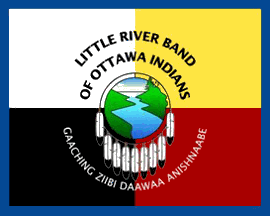
At a glance
HEADQUARTERS
Manistee
Manistee, Michigan
BOUNDARY ACRES
Tribal homelands and trust lands are centered in northwestern Lower Michigan, primarily within Manistee and Mason counties, with administrative headquarters located along the Manistee River watershed. No acreage figure is given in the post.
COUNTIES
2
Manistee; Mason
ENROLLED
1200
Estimated enrolled
GOVERNMENT
Council of Three Fires (Niswi-mishkodewinan), historic member
Tripartite constitutional government (Executive, Legislative Tribal Council, Judicial)
Anishinaabemowin (Odawa)
TRIBAL LANGUAGE
Algonquian
LANGUAGE FAMILY
Downloadable Media

Learning Image Gallery
Click each image to learn more.


Brief History
Culture
Modern Horizons
Tribal Lands

The Little River Band's lands sit in Manistee and Mason counties in northwestern Lower Michigan, along the Manistee River watershed near Lake Michigan. The historic Manistee Reservation runs along the Manistee River valley, with the 1855 reservation lands reaching into Custer and Eden townships in Mason County and Crystal and Elbridge townships in Oceana County. Tribal headquarters are at Manistee, with trust lands and tribal facilities spread across the two counties.
Learn More
Little River Band of Ottawa Indians Official Government Portal - https://lrboi-nsn.gov | LRBOI Cultural Preservation Department - https://lrboi-nsn.gov/government/departments/cultural-preservation | LRBOI Natural Resources Department and Sturgeon Program - https://lrboi-nsn.gov/natural-resources
Reference and Sources
1. Little River Band of Ottawa Indians. Constitution of the Little River Band of Ottawa Indians. Manistee, MI. | 2. United States Congress. Public Law 103-324: Little River Band of Ottawa Indians Act (108 Stat. 2156). Washington, D.C. | 3. McClurken, James M. Our People, Our Journey: The Little River Band of Ottawa Indians. Michigan State University Press. | 4. U.S. Bureau of Indian Affairs. Michigan Agency Trust Land and Treaty Records (Treaty of Washington 1836; Treaty of Detroit 1855). | 5. Michigan Department of Civil Rights. Report on Historical Michigan Tribal Nations and State Relations.