.png)
Did You know? Archive

September 17, 2026
The Atlatl Launched Darts at 100 Miles Per Hour
Thousands of years before the bow and arrow, Indigenous hunters across the Americas mastered the atlatl (spear-thrower). Acting as a mechanical extension of the arm, this highly engineered wooden tool uses leverage to launch flexible, six-foot darts at speeds exceeding 100 miles per hour—powerful enough to pierce the thick hide of a woolly mammoth.

September 16, 2026
Amazonian Tribes Created Self-Regenerating Soil
The soil in the Amazon rainforest is notoriously nutrient-poor, but ancient Amazonian tribes engineered sections of hyper-fertile ground known as Terra Preta (dark earth). By systematically mixing charcoal, bone, crushed pottery, and compost into the ground, they created a micro-ecosystem that retains nutrients and actually regenerates itself, remaining highly fertile even thousands of years later.

September 15, 2026
The Hohokam Engineered 500 Miles of Desert Canals
Over 1,000 years ago, the Hohokam people transformed the arid Sonoran Desert into a thriving agricultural center by engineering over 500 miles of sophisticated irrigation canals. Using only stone tools and wooden digging sticks, they achieved precise gradients that allowed water from the Salt and Gila rivers to flow continuously without eroding the banks or stalling, laying the exact foundation for modern-day Phoenix's water system.

September 14, 2026
Aspirin’s active ingredient was first used for pain relief by Indigenous healers.
Native Americans chewed or boiled the bark of the willow tree to treat fevers, inflammation, and pain. Hundreds of years later, scientists isolated the active compound, salicylic acid, from willow bark, which directly led to the development of modern-day Aspirin.
September 13, 2026
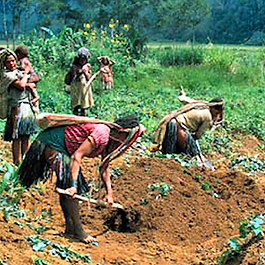
Over 4,000 distinct varieties of potatoes were cultivated by Indigenous farmers in the Andes.
While modern grocery stores typically carry only a few types of potatoes, Andean peoples spent thousands of years selectively breeding the crop to survive in high altitudes, resist pests, and withstand frost. This incredibly resilient super-crop later became a global staple that saved much of Europe from famine.

September 12, 2026
Indigenous peoples of the Americas invented the first hypodermic syringes.
Centuries before the modern medical syringe was patented, Indigenous healers in South and Central America used hollow bird bones attached to small animal bladders to inject medicinal washes, clean wounds, and deliver herbal remedies directly into the body.

September 11, 2026
The city of Cahokia was larger than London in the 12th century.
Located just outside modern-day St. Louis, this Mississippian metropolis was the largest pre-Columbian city in North America. It supported a population of up to 20,000 people and featured over a hundred massive earthen mounds, including Monks Mound, which has a footprint larger than the Great Pyramid of Giza.

September 10, 2026
Plains Indian Sign Language was a universal language that united dozens of distinct nations.
Long before European contact, tribes across the Great Plains developed a complex and fully functional manual language. Because the plains were home to incredibly diverse spoken language families, this sign language allowed nations like the Lakota, Cheyenne, and Comanche to trade, negotiate treaties, and share stories seamlessly.
September 9, 2026
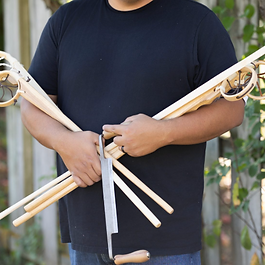
The modern sport of Lacrosse originated as an Indigenous "Medicine Game."
Created by Native peoples across North America, including the Haudenosaunee and Algonquin, the game was originally played to resolve territorial conflicts without going to war, to heal the sick, and to honor the Creator. Some ancient games took place over miles of terrain and included hundreds of players.

September 8, 2026
The "Three Sisters" agricultural method is a marvel of ancient Indigenous ecological engineering.
By planting corn, beans, and squash together, Indigenous farmers created a perfect symbiotic relationship. The corn provides a natural trellis for the beans to climb, the beans pull nitrogen from the air to fertilize the soil, and the large squash leaves act as a living mulch to retain moisture and block weeds—all without artificial chemicals.

September 7, 2026
Shoshone Navigation
Sacagawea, a Lemhi Shoshone woman, navigated over 2,000 miles of the Lewis and Clark expedition while acting as an interpreter and caring for her newborn child.
September 6, 2026
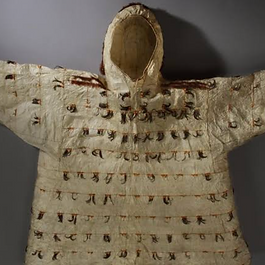
Yup'ik Waterproof Gear
Yup'ik seamstresses fashioned lightweight, fully waterproof rain parkas made from dried seal or salmon intestines.

September 5, 2026
Sac & Fox Athletic Legend
Jim Thorpe, a member of the Sac and Fox Nation, was the first Native American to win an Olympic gold medal for the U.S. (1912) and played both professional football and baseball.
September 4, 2026
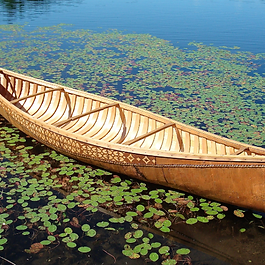
Abenaki Canoe Trade
The Abenaki crafted lightweight birchbark canoes using spruce roots and tree resin, allowing them to travel connected waterways from Maine across the Great Lakes.

September 3, 2026
Catawba Pottery Tradition
The Catawba Nation in South Carolina maintains an unbroken pottery tradition stretching back over 4,000 years, using clay dug from the same native riverbanks.

September 2, 2026
Zuni Inlay Craftsmanship
Zuni artisans pioneered a channel-inlay jewelry technique using precisely hand-cut turquoise, coral, and mother-of-pearl set into intricate silver geometric grids.
September 1, 2026
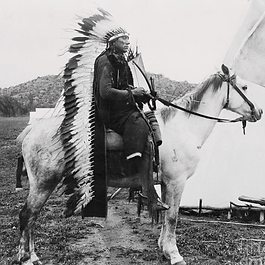
Comanche Equestrian Mastery
The Comanche adopted the horse in the late 1600s and became renowned as some of the most skilled horseback riders and strategists on the continent.

July 23, 2026
The Mapuche people successfully resisted colonization for over 300 years, remaining fiercely independent from both the expanding Inca Empire and the Spanish Crown.

July 22, 2026
Sequoyah, a Cherokee silversmith, independently created a highly effective writing system for his people in the early 19th century, a rare feat in human history.
Without knowing how to read or write in any other language, Sequoyah spent 12 years developing a syllabary of 85 characters representing the exact sounds of the Cherokee language. Within just a few years of its introduction in 1821, the Cherokee Nation achieved a higher literacy rate than their European-American neighbors, leading to the rapid publication of the first Native American newspaper, the Cherokee Phoenix.

July 21, 2026
The Navajo Code Talkers developed an unbreakable military code based on their complex, unwritten language that was crucial to the Allied victory in the Pacific during WWII.
Recruited by the U.S. Marines, these bilingual Diné soldiers transmitted secret tactical messages over military telephones and radios. Because the Navajo language is incredibly complex and had no alphabet at the time, Japanese cryptographers were never able to decipher the communications, making it the only spoken military code in modern history to remain entirely unbroken.

July 20, 2026
The Inca Empire built an engineering marvel called the Qhapaq Ñan, a massive road network spanning over 24,000 miles across the treacherous Andes mountains.
Stretching from modern-day Colombia down to Chile, this intricate system of paved roads, suspension bridges, and stone stairways was built entirely without iron tools or draft animals. It facilitated the rapid movement of armies, trade goods, and "chasquis" (highly trained relay runners), allowing the central government in Cusco to communicate effectively across incredibly rugged terrain.

July 19, 2026
The ancient Maya independently developed the mathematical concept of zero, a breakthrough that fundamentally advanced human astronomy and engineering.
Centuries before the concept of zero reached Europe, Maya mathematicians used a shell-shaped glyph to represent zero in their base-20 numbering system. This critical innovation allowed them to calculate vast spans of time, create incredibly accurate solar calendars, and construct massive, precisely aligned stone pyramids without the use of metal tools or the wheel.

July 18, 2026
The Haudenosaunee Confederacy is one of the oldest living participatory democracies on Earth and directly inspired the United States Constitution.
Established centuries before European contact, the Great Law of Peace united five (later six) distinct nations under a complex system of representative government. Founding Fathers like Benjamin Franklin closely studied this decentralized system, which featured checks and balances, veto power, and a separation of powers, ultimately adopting many of its core democratic principles when drafting the framework for the United States.

July 16, 2026
The migration of the Ojibwe people to the Great Lakes region was driven by a prophecy to find "the food that grows on water."
This profound connection to Manoomin (wild rice) is why the Anishinaabe ultimately settled in present-day Minnesota and the surrounding areas. The cultural and survival importance of this staple was so central that during the 1837 Treaty of St. Peters, Ojibwe leaders fought to include a rare provision that permanently retained their right to hunt, fish, and gather wild rice on the ceded lands.

July 17, 2026
Corn came from Teosinte, which is a grass.
Indigenous tribes in southern Mexico began a selective breeding process to make this grass more edible and the result was corn!